Who Can Access a Safe Deposit Box?

The short answer is “only you”, but in some instances…

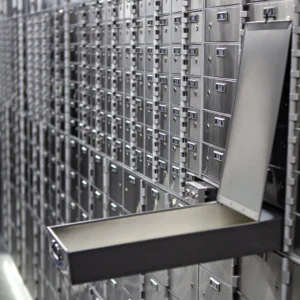
If you are wondering who can access a safe deposit box, the simple answer is: only the individuals who are listed on the safe deposit box rental agreement. So, if you have a safe deposit box rented in only your name, then only you can access it. If you and your spouse have a box rented in both of your names, then you both would be able to access it. 

However, there are a few circumstances in which other individuals might be able to gain access or obtain knowledge about your safe deposit box: 

  • If you pass away. 
  • If anyone else on the safe deposit box rental agreement passes away. 
  • If a legal opponent obtains a subpoena against the entity where your box is located. 
  • If law enforcement officials obtain a search warrant for your box.  
  • If you fail to renew your contract at the end of the rental period and don’t retrieve your belongings. 
  • If the entity where your box is located closes its safe deposit box services (more of a concern with banks).

How each of these circumstances is handled will depend on whether you’ve rented your box from a bank or from a private vault, like Safe Haven Private Vaults. This is because a bank will have your personal information on file, while some private vaults, like Safe Haven Private Vaults, allow clients to store their belongings anonymously so they will handle these matters differently. 

If you’ve rented from a bank:

  • The death of anyone listed on the safe deposit box rental agreement may result in the contents of the box being held by the bank and access to the box being revoked for everyone – including any other individuals on the box or relatives – until they receive documents from legal authorities detailing who they should release the contents of the box to.
  • If a legal opponent or law enforcement officials obtain a subpoena or search warrant against you, a bank may disclose your identity, the location of your box, and potentially turn over all of its contents. 
  • If you fail to renew your contract at the end of the term, or the bank closes its safe deposit boxes, the bank will send a written notice to you, and then drill your box and inventory its contents. It’s then up to you to track down where your belongings have been taken and stored and obtain the paperwork to regain possession of your items. 

If you’ve rented from a private vault (i.e. Safe Haven Private Vaults):

  • If you rent from Safe Haven and you or someone else on your box passes away we will continue to store your belongings until next of kin come in to claim them, or until the box expires, at which point we will turn your assets directly over to your family, your attorney, or whoever you have designated should receive them (We have an internal process to ensure that your belongings are properly bestowed to the individuals you desire.)
  • If a legal opponent or law enforcement officials attempt to obtain a subpoena or search warrant for your box, they will need to obtain your specific box number from you first, as your name is not stored on our records. You have full control over the information needed to access your box.
  • If you fail to renew your box at the end of your contract, we will attempt to contact you at least ten different times and in different ways over at least two months before we examine the contents of your box and look for any additional contact information. At that point, your belongings will still be stored for up to several years in the hopes that you or a trusted individual will return to claim them. 

(Please note, it is not our intention to provide ways to hide assets from the IRS or law enforcement officials, etc. We will always cooperate fully with law enforcement and government officials. The anonymity we offer provides an increase in privacy and we trust our clients to be responsible.) 

In Conclusion

Only you should be able to access your safe deposit box, but a private vault will provide far more security, privacy, and control over your assets and belongings than a bank if an unexpected event occurs. 

If you want complete confidence and peace of mind then choose to store your belongings with Safe Haven Private Vaults. Learn more about our safe deposit box offerings here

Private Vaults

Why you should choose a private vault over a bank to store your assets?

1. Enhanced Security and Peace of Mind

When it comes to safeguarding your valuable assets, a private vault provides an unparalleled level of security and peace of mind. Safe Haven Private Vaults is a state-of-the-art facility dedicated to secure asset storage. Unlike bank safe deposit boxes, our private vaults are purpose-built to protect your assets with advanced security features and military-grade practices. From bulletproof vault interiors to iris scanning access control, our facility utilizes the latest technology to ensure the utmost protection for your valuable assets, including gold and other valuable possessions.

2. Private vaults provide privacy and anonymity

Storing your assets in a private vault offers a level of privacy and anonymity that is crucial for your financial affairs. Safe Haven Private Vaults respects your need for confidentiality by providing completely anonymous storage solutions. Unlike banks that require extensive documentation and disclosures, we prioritize your privacy. Your assets remain secure and protected without the fear of being traced or tracked. Our commitment to anonymity ensures that your valuable assets are kept safe while maintaining the utmost discretion and confidentiality.

3. You’ll want convenience and accessibility

When it comes to storing your assets, the convenience and accessibility offered by a private vault are unparalleled. Unlike bank safe deposit boxes, which often require appointments during limited business hours, private vaults provide 24/7 access to your valuables. This means that you can retrieve or deposit your valuables whenever it’s most convenient for you, without the need to adhere to strict bank schedules. Whether you’re a business owner who needs access to your assets outside regular business hours or an individual investor who values the flexibility of accessing your portfolio at any time, a private vault ensures that your storage is never restricted by time constraints.

4. Private vaults don’t limit storage capacity

In contrast to bank safe deposit boxes that often have restrictive limitations on the value of items stored, private vaults offer unlimited storage capacity for your assets. Major banks such as Wells Fargo and Chase impose restrictions that can severely limit the amount of valuable items, including gold, that can be stored. At Safe Haven Private Vaults, we believe in providing you with the freedom to store a substantial quantity of assets. Whether you have a modest collection or a substantial portfolio, our private vaults can accommodate your storage needs without any constraints. You can enjoy the peace of mind and convenience of storing your assets without limitations, knowing they are kept safe and secure in our facility.

In Conclusion

When it comes to safeguarding your valuable assets, choosing a private vault over a bank offers unmatched security, privacy, convenience, and unlimited storage capacity, making them the superior choice for safeguarding your assets. Whether you are storing gold, important documents, or other assets, Safe Haven Private Vaults is the superior storage option giving you complete security and total peace of mind.

Learn more about our
Safe Deposit Boxes

Learn more about our
Large Storage Vaults

A Personal Experience in Offsite Gun Storage


Hi I’m Jeremy,

Like most gun owners, I like having a handgun and a rifle stored in my home where I can access them quickly to protect my family.  Saying it mildly, I’m big on 2nd amendment rights! Keep them close, and keep them ready, right? 

Don’t worry this isn’t a story about giving up my guns, but a little over a year ago a story popped up on my phone where a 7-year old girl and her 11-year old brother found the hidden key to a locked door where their parents had a handgun locked up.  The 7-year old accidentally shot and killed her brother.  On the same weekend, another young boy accessed a gun inside of a “locked gun box” and took it on a playdate to his cousin’s house where he accidentally shot an 8-year-old boy and a 12 year-old girl. 

Both guns were locked up, and the sneaky kids figured out how to access them anyway.

It didn’t really change anything about having guns in my house. But I did do 2 things.

First, I sat down with my kids and went over, yet again, gun safety.  I’m big on that, even with my little ones.  No curiosity, no temptation. 

But the second thing I did surprised me. 

As I looked at my collection, and I’m proud as hell of my collection, I realized just how many people know about my collection.  And as much as I think it would never happen, statistically, families who are known to have several firearms at home are more likely to become victims of firearm theft, even when those firearms are locked up.

Facts are Facts and if someone held a gun to my wife’s head, and I had no other option but saving my wife and kids or saving my guns,  100% I would be opening my gun safe to them.

Now, I don’t think that would ever happen.  I mean, I certainly hope not.  But, what is even more possible is extremist government legislation that could impact my right to own firearms.

In either scenario, I realized the hard truth that having everything in one place was actually a liability to my family and potentially my future freedoms.

Do I still have guns in my home to protect my home and family? YES absolutely I do!  And what I realized was that most of my firearms were for hunting, collecting, and show-guns; none of those needed to be “ready access.” I mean, if I’m going target shooting I have time to plan and when I go hunting I have plenty of time to plan. So there was a small chance I would be willing to store those guns somewhere more safe. 

But I had a new problem:

  1. I still wanted fast 24/7-365 access to my firearms.
  2. I wanted the “what and where” to be anonymous.
  3. Security, and I’m talking about better than the bank type of security.

Most obvious was to store my second level firearms at a family or friend’s house.  Logical and cheap, well until I started thinking about it.  Really, a family member or a friend is no more secure than my own house, I can only gain access when they are home, and after searching the web I found that most kid and teen accidents happen with firearms at friends or relatives homes.  So this one was out.

I know you can store firearms with a local police department. I have nothing bad to say about our local PD, they are actually really great.  But no.  Usually if you think someone might gain access to your firearm with the intent to hurt themselves or others, a police department will let you store them for a short time there.  However, I wanted something more long term and I wanted to maintain control.  However, it’s probably the quickest and most secure place to get guns into if a family situation suddenly arises. 

My local shooting range also lets patrons store firearms there. It’s mostly to get them out of the house if there is a threat of personal harm.  The great thing about the range is that they are also a firearms store so they have an FFL and I can ship firearms to and from there if I am selling or going on a long trip.  The problem is that access is not very convenient and all the paperwork means there are no anonymous solutions there.

Bank Safe Deposit box… Well obviously firearms=NO… However in my google searching, I found a local private vault called Safe Haven Vaults that acts similar to a bank box but with far more security and autonomy.  Their facility has many vault sizes including full sized rifle specific vaults.  The cutting edge security makes it feel like walking onto a real world movie set and I can access the vault anytime on any day.  Like my shooting range, Safe Haven Vaults is an FFL so I can ship and receive firearms legally with them.

I obviously kept the best for last, and it wouldn’t surprise you to know that while I still keep some of my firearms in my home, others are inside of my private anonymous vault waiting for my next adventure.

Interested in learning more about Safe Haven Private Vaults?

Schedule a guided tour of our first-class private vault facility today!

Top 3 Oversights of Firearm Storage and How to Fix Them

Spoiler alert: Your Utah home probably fails 2 out of the 3…​

Stow or Go, Where Can I Store My Guns?

This question troubles thousands of people every year. The right to keep and bear arms, guaranteed by the 2nd Amendment, is a valued and cherished right in the United States.

We agree that having a firearm safely stored at home for personal protection is a closely guarded right and privilege, however, there are occasions when storing a firearm in your home is not an option.

For example:  

  • A family member or resident of the home has a history of struggling with depression. anxiety, or suicidal thoughts.
    • According to the American Psychiatric Association “more than 60 percent of all firearm deaths are suicides. Although there are many ways of trying to commit self-harm, attempting suicide with guns is lethal 85 percent of the time, and over 50 percent of completed suicides involve firearms.” 
  • You are concerned with the increasingly strange behavior of your teenage children…
    • The American Psychiatric Association also states that “Suicide is the second leading cause of death among adolescents. About 40 percent of teen suicides are committed with firearms—typically those of their parents.”
  • Leaving your home for an extended period of time for Active Military Duty, a long business trip, or temporarily relocation.
  • Temporarily renting out your home.
  • You own expensive show guns, and don’t want to risk them being stolen.
  • A divorce necessitates the removal of firearms from your home during proceedings.

We get it, sometimes word gets around that a particular neighbor has a lot of guns at home.  And although it sounds counter intuitive, statistics show that homes known for having many guns are more likely to be victims of firearm theft. In fact, the FBI’s Uniform Crime Reporting Program, claims that more than 300,394 firearms were reported stolen from private citizens in 2020. Ref  

We believe in the Stow and Go method of firearm storage.  Or Show and Go…  the idea being to keep protective firearms safely accessible at home, but keep the show guns or special use guns in a more protected location safe from theft and accidental misuse. But still stored in highly accessible and secure locations.  But more on that in a minute… 

Fortunately, there are local pro-gun solutions for  storing firearms away from home for a period of time. We’re going to take a look at the details of each solution, but first, let’s take a look at the factors you need to consider when storing firearms.

Read about Jeremy’s experience with this stituation…

Offsite Firearm Storage​

Keeping firearms in a secure location aside from home or place of work.

Offsite firearm storage is typically used when home storage is not an option due to mental illness or an extended leave of absence, or to protect valuable firearms from theft.

3 Considerations of Offsite Firearms Storage​

1. Security​

Store your firearms in a location that is safe and secure. This is a no-brainer.

Security includes denying access to children and individuals who are a danger to themselves and others, as well as preventing theft and damage to the firearms stored there. 

2. Convenience​

24/7 access to your firearms is ideal. This gives you the flexibility to swing by your off-site  location to grab your rifles before a Saturday morning shoot  or showing them to an interested buyer on short notice. 

Even if 24/7 access isn’t an option, keep in mind how much of a hassle it could be to get to your firearms if the need arises.

3. Length of Potential Storage Time​

Do you need offsite firearm storage for a week or a year? Or is it still up in the air? 

Special use guns, like hunting rifles, semi-automatic rifles, and valuable show guns pose an increased theft risk to homeowners, even when stored inside in home safes. Take a moment with each of your guns and determine how often you “need” access to that gun inside of your home.  Often owners discover the accessibility to show guns and hunting rifles is far less important than ensuring their protection from theft from civilian and/or political thieves.

Knowing how long you are looking for storage will help you select the right firearm storage solution.

Bonus: FFL Holding Storage Location​

While not a necessity, using a firearm storage location that holds an FFL (Federal Firearms License) can be very useful. FFL holders are able to handle shipments of firearms and can help if you want to send or receive firearms. An FFL holder could also help if you were trying to sell or purchase additional firearms.

Want to cut to the chase and see a storage location that ranks highest in all of these? Schedule a guided tour of our private vault facility today!

Anonymous Asset Storage​

The act of storing assets for future access or use without revealing the identity of the owner.

Anonymous storage is often used to shield assets from unscrupulous individuals targeting the owner.

The 4 Options for Offsite Firearm Storage

Contrary to popular belief, you cannot store firearms in most bank safe deposit boxes and residential storage units.

Virtually everyone who stores their firearms offsite uses one of the following four locations. We have ranked them worst to best according to the above criteria.

#4 – With the Local Police Department

Overall 2 Stars out of 5

Most police departments will take custody of a firearm for short periods of time if there is a concern that someone with access to the firearm (you or a family member) will attempt to harm themselves. 

This is an excellent option for storing firearms short term to prevent a possible suicide, but this is not a viable option for long term firearm storage. It could also be difficult to access your firearm while it is being stored by police until the potential threat of misuse of the firearm has passed.

#3 – At a Firearms Store or Shooting Range

2.5 Stars out of 5

Bonus points for this one if you value a firearm storage location with an FFL.

Similar to police departments, many gun stores or ranges are willing to store firearms for a time if you need to store your weapon out of the house. There are a few that might offer long-term firearm storage, but most are willing to help out for short term situations.

If you need access to your firearms while it is being stored, a store or range will likely be more accommodating than a police department, but you will still have to be there during business hours and work around their schedule.

#2 – At a Friend or Relative’s Home

2.7 out of 5 Stars

A friend or relatives’ home is definitely the most commonly used offsite firearm storage location, and can be simple and convenient. Unless the individual you are storing firearms with is going to move soon, you can usually keep your guns in their safe for up to a couple years without causing too much inconvenience. 

The biggest downside with this approach is security. This is usually the least secure of any of the four storage options, even with the assumption that your firearm is locked in their safe. 

(Over 380,000 guns are stolen, on average, in the United States per year.)

It might also be frustrating to only have access to your firearms when someone else is available to let you in their house and get them for you. (It’s tricky if they left on their week-long hunting trip before you, and you haven’t grabbed your rifle yet…)

#1 – In a Private Vault Facility

4.7 Stars out of 5

If spending some money on a secure location for firearms storage is a deal breaker, then look elsewhere. But otherwise, this is by far the best solution for secure firearm storage.

A good private vault will have multiple layers of security keeping your firearms safe (Eye scanners, bulletproof walls, multiple checkpoints, etc.), will give you 24/7 access to whatever you have stored there, and will allow you to rent a vault for firearm storage for as long as you want. A few private vaults also hold FFLs and can handle firearms sales and transfers.

Basically a bank vault on steroids, a private vault is the ideal storage location if the firearms being stored are high in value, if you need easy access to your firearms, or if you want the very best security for your firearms collection.

Interested in learning more about private vaults?

Schedule a guided tour of our first-class private vault facility today!

Schedule a Guided Tour

Private Vault

A secure self-storage facility for storing assets such as gold, silver, firearms, important documents, jewelry, artwork, cash, etc.

Private Vaults typically have far fewer regulations on storage and much higher levels of security than bank safe deposit boxes and residential storage locations.

Recap

When considering where to store your firearms, make sure that you evaluate possible storage locations on these three criteria: security, convenience, and how long you will be storing your guns for. 

The four potential firearm storage locations are (from worst to best):

  • The local police department
  • A gun store or range
  • With a friend or relative
  • At a private vault (the best and safest option in our opinion)

Schedule a personal tour of our private vault facility, and see if this is the right firearm storage location for your needs.

Coin Collection Storage

Three important aspects of coin collection storage…

When I turned 9 years old, my Father gave me a set of Lincoln Cent coin collecting booklets for my birthday. Excitedly, I gathered up all of the loose change in the house and went to work filling in the empty spaces in my booklet. When my booklet was full, I ran to show my dad my “completed” Lincoln Cent coin collection. He laughed, and gently explained that each spot in the booklet was for a very specific coin, not just any penny. We popped all of the misplaced coins out of my booklet and started going back through the pile of change I had amassed, carefully examining each coin to determine if it would fill one of the empty spots in my booklet. 

A week later, while going through several rolls of pennies obtained from the bank and looking for ones I needed in my collection, I asked my dad if I could see some of the coins he had in his personal coin collection. He told me that he didn’t have all of his coin collection at our house, but he would happily show me what he had. I was surprised when, instead of pulling his coin collection out of his dresser drawer (where I had been keeping mine) he went to the fire safe that was in the back of his closet and pulled out a few coins that were in cases very different from my little booklet. When I asked why he kept his coins in a safe, he began to explain that valuable coins needed to be stored a bit differently than the pennies I had been collecting.

There are three main considerations that you have to weigh when deciding where and how to store your coin collection. There are also three main locations that can be used to store coin collections. Here are the pros and cons.

TOP 3 Considerations When Storing Coin Collections​

1. Ease of Access to Your Coin Collection​

Ease of access is a big consideration when deciding where and how to store your coin collection. It’s great to have your coins close on hand or easy to get to for a variety of reasons:

  • It can be fun to go through your collection on occasion or be able to show it to friends and family.
  • When you have a coin to add to the collection, it’s easy to put it in place.

But, if your coin collection has a lot of value, consider keeping it somewhere secure, with 24/7 access. This balance between ease of access, and keeping your coin collection secure provides peace of mind and convenience. 

2. Keeping Your Coin Collection Secure​

A small Lincoln Cent collection can most likely be stored safely in a sock drawer. However, when you start collecting coins with higher value – especially if you are using coin collecting as an investment vehicle – the security of your collection is very important.

When assessing location security for your coins, remember the 3 “A”s: Anonymous, Access, & Absorption

  • Anonymous: Who would have knowledge of where your coin collection is stored?
  • Access: Who could get access to your coin collection? How determined would an individual have to be to take it?
  • Absorption: Is your coin collection in danger of fire, flood, or another disaster?

To reduce the risk of theft, store your coin collection in a place where very few people have knowledge or access to it. 

Determined criminals can gain access to coin collections even when they are stored in a large in-home safe!

Typical home fire safes can only withstand an average home fire for about 30 minutes. At that point the internal temperature can quickly reach temperatures that will char or melt the paper and plastic coin holders. Although the fire itself will likely never reach the point of melting the coins, the chemical reactions from the charred paper and melting plastic can pit coins and cause other irreversible damage to the metal. 

As it turns out, even fire rated safes won’t stop many threats to your coins.

If not at home where? 

There are three main locations where you can store your coin collection:

1. At Home – low level of security.

2. At a Bank – mid level of security.

3. At a Private Vault – high level of security.

Details on the advantages and disadvantages of each of these storage locations will be given in the following post. (Read that post here.)

Whichever location you choose to store your collection, you will want to make sure that the storage environment will protect your collection, and will significantly decrease the risk of damage or theft.

3. The Environment Where Your Coin Collection is Stored​

Regardless of where you chose to locate your coin collection, it is best to keep your coins inside of a protective container, and to store silica packets with your collection. 

  • An airtight container such as a safe or vault can seal in humidity in the air which can affect the contents of the container, i.e. your coin collection. Hence, having a silica packet will help protect against humidity and moisture.
  • There are a wide variety of options for encasing individual or several coins for storage. The most important thing to consider when selecting packaging is to be aware of how this will protect the coins from moisture or chemicals in the air. 

Caution on Paper or Cardboard: most paper and cardboards are made from wood pulp, which contain organic acids (lignin). Over time these acids may be released and could damage coins that are in contact with the wood or paper.

Even after safely encasing your more valuable coins and placing silica packets into the container with your coin collection, it is wise to consider the overall environment of your coin collection.

  • Try to select an environment that is temperature controlled, with lower levels of humidity, and without high levels of air pollution, or indoor VOC (volatile organic compounds) pollution. Private vaults and banks usually provide safer and more stable environments than do most homes. 
  • Temperature by itself will not damage a coin collection, but high and low temperatures can compound with other issues in the environment (like humidity or pollution) and cause damage.
  • Pollutants in the air will react with most metals and cause discoloration, decay and degradation of the surface of the coins.

Be mindful of chemicals and substances (paints, sprays, varnishes, cleaners, etc. will produce indoor VOC pollution) that are used in the area of your coin collection to avoid potential damage

As a Summary…

When you are storing a valuable coin collection, it is imperative that you store your coins safely. The three main things to consider when evaluating a potential storage location are: 1) Ease of Access, 2) Security, and 3) The Environment where your coins will be stored. 

There are three main locations for storing your coin collection: at home, at a bank, and at a private vault. Read about the advantages and disadvantages of each of these locations, and how ease of access, security, and environment factor into each of these locations in our post The Three Main Storage Locations for Coin Collections.

Interested in a personal tour of our climate controlled, multipoint-secured Private Vault facility?

Is Iris Scanning Safe?

Iris scanning is safe for your eyes.  Variants of iris scanning exist in both high security areas and even today’s smartphone.  Iris scanning is done by using light in the infrared band.  Infrared light is just below the visible light on the electromagnetic spectrum.  This type of light is all around us all the time.  Sunny days feel warm as part of the energy given off by the sun is infrared energy.   In nature bodies even give off infrared radiation in the form of body heat.  So this type of radiation is something completely natural and something we experience every day.

Does Iris Scanning Harm Us?

The main area that is affected during an iris scan is the eyes and skin around them.  Infrared radiation is a non-ionising radiation.  This means that infrared energy will not cause cancer.  Heat is the only potential side effect, and even that is nearly unmeasurable.  Iris scanning takes literally only seconds.  So the amount of time a user is exposed to infrared energy is miniculse. That means in the case of iris scanning for security purposes, it is completely safe.

Scanning’s Effect on the Skin

The energy level is so low in the application of iris scanning for security purposes that there is no chance of ever having any damage.  With drastically high infrared energy levels for extended durations of exposure, there is a possibility of harm.  But in the application of security and iris scanning the job is done in mere seconds.

Scanning’s Effect on the Eyes

For people who work in fields where they are exposed to high levels of infrared energy, such as glass, steel, or other very hot materials, there is a risk to the eyes. Extreme exposure over the course of many years can cause cataracts.  This is due to the heat from infrared light causing the proteins in the eye to warm up and become cloudy.

Infrared light is different from visible light.  When bright visible light is sensed by the eye, our pupils tighten and we squint naturally to avoid excessive light into our eyes.  Infrared light isn’t something we can detect with our eyes so we do not have a natural reaction that protects us from excessive exposure to infrared radiation. 

In situations apart from iris scanning for security excessive amounts of infrared radiation can also affect the back of the eye, called the retina.  Excessive amounts of radiation to this area of the eye lead to degenerative eye diseases such as macular degeneration, a type of vision loss. 

https://www.high-endrolex.com/41

Duration & Intensity of Exposure

Establishing if iris scanning is safe all culminates with the amount and intensity of exposure.  If a person is exposed to infrared energy for long periods of time and at high intensities it will cause damage.  It is a fact that we are exposed to infrared radiation every time we use a stove, oven, and even our TV remote.  Even smartphone manufacturers have installed infrared iris scanning for security purposes on their phones.  It is a part of our daily routine and doesn’t cause harm as it is low levels of infrared and typically only for a couple of seconds. 

Iris Scanners

Safe Haven uses the highest quality iris scanners from the world leading manufacturer.  Essentially iris scanning involves nothing more than the taking of a digital picture of a client’s pattern.  Each eye is totally unique, even between twins or an individual’s left and right eye.  From the digital picture template patterns are created and a 512-byte encrypted file is created.  It cannot be reconstituted or re-engineered to produce any type of visual image. In addition to Safe Haven’s database being offline to protect against hackers, with Iris ID’s encryption it would be impossible to print a contact lens to defeat our security protocols. Best of all for safety our eye scanning technologies are non-contact and do not involve any bright lights or lasers.  So it is 100% safe security that you can depend on. 

Safe Haven Security Protocols

Learn more about Safe Haven’s security protocols that keep our client’s valuables safe. It is our mission to be the most security private vault/security box facility in the United States. We have made huge investments not only in the blast proof walls and enormous concrete layers but advanced access authentication protocols. All of this culminates in the most secure place to keep precious items, all with the benefit of optional total anonymity.

Safe Deposit Box Alternatives

If you’re looking for safe deposit box alternatives, you’re not alone.  Our non-bank safe deposit box service is your insured and protected storage option.  A private vault is the best alternative to a safe deposit box at your bank. With superior security, optional total anonymity, and biometric security measures we offer the highest degree of safety and security. 

Non-Bank Safe Deposit Box

Private vault storage is your non-bank safe deposit solution.  Offering fully insured storage with the benefit of military grade security it is the safest place to store your valuables.  We offer protection for your cash, coin, silver, and gold storage needs.  You can keep anything in our non-bank safe deposit boxes, with the exception of explosives or illegal substances.  

Check out the Non-Bank Safe Deposit Boxes at Safe Haven

Home Safe

A home safe is another option and with demand for them spiking many have bought one.  With banks facing bailouts, buy-outs, nearly collapsing or actually closing bank safe deposit boxes just are safe. With a sledgehammer and crowbar even the best home safes will only last so long.  In addition if your home is damaged by fire, flood, or other disaster no safe will guarantee their content’s safety. 

Do You Really Need A Safe Deposit Box?

Do you have anything you’d want to save from a house fire, flood, or explosion?  Then the answer is YES! The primary purpose of a safe deposit box is to protect your valuables.  Common items people place in a safe deposit box include: heirlooms, valuables, important documents, gold, silver, and collectable coins.  Some people also choose to place firearms in safe deposit boxes for safe keeping.  

Make a list of all the things that’d you’d be crushed by if you lost them to a fire in your home.  That will either give you an idea of what you’d want to put in a safe deposit box, or will help you realize you don’t need one.  Read more on if you need a safe deposit box here.

Can The Government Get Into Your Safety Deposit Box?

https://www.high-endrolex.com/38

The government can get into a bank safety deposit box.  In contrast a non-bank safe deposit box can be set up with 100% anonymity.  Being totally anonymous protects your valuables from being tracked by government entities.  This means they can get into your bank safe deposit box, but not ours. Read more on Are Bank Safe Deposit Boxes Really Safe?

Is It Legal to Keep Cash In A Safety Deposit Box?

It is legal to keep cash, gold, sliver, diamonds, coins, action figures, or whatever means the most to you.  Protecting your collectables and valuables from theft, fire, flood, or other damage in your home is our priority.  Read the FDIC’s Five Things to Know About Safe Deposit Boxes, Home Safes and Your Valuables.

Bank Safety Deposit Box Risks

While bank safety deposit boxes are secure, they aren’t 100%.  If there is a natural disaster or other crisis it might be hard if not impossible to access your box.  This is why a lot of people will make copies of important documents. In addition bank safety deposit boxes are not under the protection of FDIC insurance.  In addition you need an ID or SSN to open a bank safety deposit box account. That means if there ever is a situation where assets are being seized, the government will be able to find your safety deposit box.

What Should Go In A Safe Deposit Box

There are many types of things people choose to keep in safe deposit boxes.  These include important documents, jewelry, gold, silver, and more. Read more below about some of the common safe deposit box contents. 

Jewelry

If you’ve got jewelry you don’t wear often, especially heirlooms, a safe deposit box is the place to protect them.  Homes get broken into and home safes won’t hold up to determined burglars.  

Gold Bullion & Silver

Lots of savvy investors know that gold and gold bullion is one of the best assets to own during a depression.  It holds its value or appreciates. So this is a common strategy for the wealthy to protect their interests.  

Collectable Coins

Collectable coins are a very common item put into safe deposit boxes.  These items will lose their value if there is a disaster in the home and are protected better in a private vault.  

Firearms

Whether the firearm is collectable, there are kids in the home, or someone just wants to have an extra in case of emergencies, a deposit box is the way to do it.  

Titles & Deeds

These important documents are best kept in safe deposit boxes.  They are the proof of ownership for you and your possessions or real estate.  

Passports

Unless you’re a bit of a globe trotter you’re likely not using your passport every year.  Keeping your passports in a safe deposit box prevents theft or losing them to fire.

List Of Valuables In Home

Home insurance policies function, in part, on detailed lists of valuables in your home.  If this list is lost to fire you won’t have a very comprehensive idea of what was in the home.

Bonds, Notes, & Stocks

These valuable items should be protected from fire, flood, and theft.  Doing so at home comes with unmanable risks. Safe deposit boxes are the smart way to protect your wealth!

What Should Not Go In A Safe Deposit Box

While lots of valuables need protection, some documents and items should not go in your safe deposit box.  These are items that you need immediate access to.  

Sole Copy Of Wills

For example if you only have one copy of your will.  It takes time in the event of your passing to get into your safe deposit box.  This means that if you have any immediate directives in your will, no one will know about them until much later. 

Cash Is Debatable

Cash is one thing people debate if it should be kept in a safety deposit box.  During times where the stock market is doing well and banks aren’t in trouble, cash is better off in savings accounts and investments. In uncertain times it is better to store cash in safety deposit boxes or move them into depression resistant assets.

Explosives

Clearly no bank or private vault is interested in housing dangerous materials.  So these are best kept under lock and key elsewhere.

Illegal Substances

While private vaults are anonymous they are not safe havens for illegal substances.  They are designed for law abiding citizens to protect their valuables.

Utah’s Safe Deposit Box Alternative

If you’ve realized that you need a non bank safe deposit box, Safe Haven Private Vaults is your answer.  Our facility has military grade security, biometric identification, and can be 100% anonymous. Choose to protect your assets and heirlooms in Utah’s more secure safe deposit box alternative!  

Are Bank Safe Deposit Boxes Really Safe?

While traditionally bank safe deposit boxes were the safest option, they are not anymore. Many people are searching for safe deposit box alternatives.  Bank databases have been subject to numerous hacker attacks.  These attacks have led to private client information being stolen.  In addition your possessions aren’t guaranteed by banks. Some banks cover your deposit boxes with some insurance, however it is usually non existent or very low.  This means that to protect wealth with a bank safe deposit box you must pay for the box and insurance to cover the contents. Read more in the New York Times Article: Safe Deposit Boxes Aren’t Safe

What Is A Safe Deposit Box?

A safe deposit box is a miniature vault that only you have access to.  Many clients use them for gold storage, to store jewelry, documents, family heirlooms, and more.  While it’s usually James Bond or Jason Bourne using a safe deposit box wise investors use them to protect their assets.

Bank Safe Deposit Box Limitations

Bank safe deposit boxes come with limitations.  These can be when you can access your account and whether your valuables are actually protected.  If you need to be able to get to your assets quickly any time of day or night, private vaults are the clear winner.  

Limited Access

There is also the issue of access for your bank safety deposit box.  You are only allowed to access it during their business hours, and we all know about banker’s hours.  Our facility is open to clients 24 hours a day, 7 days a week, 365 days a year. 

Another access issue is if the owner of the bank safe deposit box should pass away.  It can be a legal nightmare to prove next of kin ownership. Safe Haven Private Vaults collects and protects information about who should have access to your private safe deposit box should the owner pass away 

No FDIC Insurance

The bank nor the FDIC insure the contents of your bank safe deposit box.  That means that should your possessions be the subject of theft, it is all on you.  There have been numerous sad stories over the years of bank safe deposit boxes coming to find their vaults empty.

Third-Party Access

In some cases safe deposit box clients want to have completely anonymous storage.  This is not possible with bank safe deposit boxes. The IRS and law enforcement agencies can petition there is reasonable cause to open bank safety deposit boxes.  In contrast a private vault is just that, private. You can choose to set up a vault with Safe Haven totally anonymously. That means your private safe deposit box is safe.

Bank Safe Deposit Box Alternatives

Clearly bank safe deposit boxes aren’t your best solution for optimal security.  The options for protecting your wealth include private vault facilities, home safes, and trying to hide your wealth from thieves. Relying on bait to believe they’ve got your wealth or a “good hiding place” will leave your wealth at risk. All of the fake mayo jars and bags in the freeze won’t discourage knowledgeable thieves. So that leaves two main alternatives, private vault facilities and home safes.

Home Safes

While a home safe might seem like your best solution, it isn’t.  With enough time and the right tools thieves will know just where to find your valuables.  While this is an option many choose, you can’t be home all the time keeping an eye on your wealth.  

Private Vault Facilities

Private vault facilities beat out home safes.  This is due to the facilities having heavy security protocols along with bulletproof buildings.  Best of all quality private vaults are open 24/7, 365.  We watch over your goods and wealth while you can leave your home safe from burglars having a chance to take what you have.   

Safe Haven Private Vaults

Our private vault deposit boxes are the ultimate in security and privacy.  You can choose to work with Safe Haven Private Vaults completely anonymously.  That means your private information isn’t on file and cannot be hacked.  For the security of our vault facility we have military-grade security, biometric scanners including iris scanning, and more.

How To Protect Wealth In A Depression

With current stock market conditions a lot of people are searching “How to protect wealth in a depression”.  You’ve worked hard for your wealth, make sure you protect it during a depression by knowing the best assets to own and best places to keep it.  

According To EnergySkeptic.com “Get out of debt, get out of debt, get out of debt!Pay off all of your credit cards and don’t get new ones. Pay down all of your loans and mortgage. Build up your cash savings. Protect your job.”

Best Assets To Own During A Depression

In today’s market with unpredictable stock market conditions savvy investors are looking to more stable assets to avoid losing wealth.  While our economy might have been on an upswing, recent events have greatly impacted the market. History has taught how important depression proof assets are.  The Great Depression was one of the greatest teachers the world has ever seen when it comes to how to protect wealth in a depression

Gold And Cash

Gold and cash are two of the most important assets to have on hand during a market crash or depression.  Gold historically remains constant or only goes up in value during a depression. If the market is diving and you want to save your investment portfolio, investing in and safely storing gold or cash in a secure private vault is in your best interests.

As a guideline it is best for your emergency fund to be at least 3 months of your living expenses.  While banks may seem like a safe way to store wealth they are not insured nor legally liable if something goes missing from safety deposit boxes.  In addition the FDIC will not always be able to insure your money in banks. It is better to invest in hard assets such as gold, silver, coins, or other hard assets.  

Real Estate

Real estate is also a good way to protect wealth during a depression.  Debt free real estate ownership is another investment opportunity which typically holds value and appreciates.  Location is of course a major consideration. An area of interest for savvy investors is near colleges, these areas typically weather depressions better.  With that said the survivability of this wealth protection method does rely on the health of the local economy.  

Domestic Bonds, Treasury Bills, & Notes

Mutual funds and stocks are considered to be a big gamble during depressions.  While Treasury bonds, bills, and notes are more secure investments. These items are issued by the U.S. government.  They give the purchaser a fixed rate interest once they mature.  

Depending on your needs you may choose short term bills that mature in as little as days.  If you are looking for longer term investment notes mature in as little as 2 years.  

Foreign Bonds

In the past many experts would have recommended foreign bonds as your depression resistant investment opportunity.  As recent events have shown this isn’t always a safe gamble. Worldwide pandemics and other market instabilities have overcome this as being a wise investment as all countries’ economies are being affected.   

https://www.high-endrolex.com/40

What is The Safest Place To Keep Wealth?

You want to protect your hard earned money, but where is the safety place to keep wealth during a depression?  You have options such as the bank, bank safe deposit boxes, or the most secure method: private vaults. Read about your options below.

In The Bank

Pulling your wealth out of the stock market and depositing into your bank accounts is a risk.  While the FDIC does currently back your accounts up to $250k, there may come a time where that insurance isn’t available.  That means banks could fail, along with your money.

In Bank Safe Deposit Boxes

For hard assets such as gold bullion, silver, coins, diamonds, or other valuable commodities bank safe deposit boxes may seem like your savior.  Unfortunately banks nor the FDIC are legally obligated to insure or protect the items in the safe deposit boxes. In fact a bank employee was reprimanded by the Federal Reserve Board for stealing approximately $30,000 dollars from a Frost Bank in San Antonio, TX.  

In The Stock Market

The stock market during a depression is volatile.  Keeping a large portion of your wealth in such an unpredictable investment method is risky.  While some stocks will likely rebound buying large amount of them may not pay out in the end. 

In A Private Vault

Private Vaults are the most secure way to protect wealth.  Moving your liquid assets into hard assets such as gold, sliver, diamonds, or coins helps invest in depression proof investments.  Once you’ve invested keeping these items at your home isn’t wise and is downright dangerous. For this purpose Safe Haven Private Vaults was created.  We offer your 24/7, military-grade security gold storage option.  

Need to Protect Your Wealth?

Learn more about our Safe Deposit Boxes

Gold Storage: How & Why To Use It

Gold storage is the method investors choose to protect their investments.  It comes in the form of crude hiding or burying, bank safety deposit boxes, and private vault storage.  It is important for investors to understand the pros and cons of each type of facility. For example home storage isn’t insured and banks are regulated and not required to insure your possessions. Private vault storage however is anonymous, secure, and protected with military-grade security.

What Is Gold Storage?

Gold storage is a term that covers more than just gold.  It is used to describe secure storage of many precious metals and materials such as gold coins, gold bars, silver, diamonds, and more.  Investing in gold and other precious metals became more popular beginning in the new millenium. The IRS allowed some precious metals in IRA accounts as assets.  While this might seem safe, it is ultimately in the hands of self directed IRA brokers. Many investors decided to invest in physical gold, sliver, and other precious materials.  This means finding secure storage to protect their investments. Our gold storage private vaults are multipurpose and you can select your size and what you want to keep in them. They can be 100% anonymous, have armed guards, and 24/7 access.  

Why Use Gold Storage?

Many savvy investors choose to use private gold storage vaults as they don’t have a secure way of storing at home.  With home break-ins on the rise it isn’t wise to leave your nest egg just sitting at home. You cannot stand vigil 24 hours a day and 7 days a week guarding your gold, but we will.  Our armed guards protect your investment in a state of the art gold storage facility. With iris scanning level security protocols your gold and other precious possessions can rest easy.  

How To Use Gold Storage

Gold storage does come with some options and government restrictions.  Learning about storage types, the laws, and insuring your investments.

Insuring Your Gold Storage

If you are thinking about or are storing your gold at home, your home insurance may not cover your precious metals or other collectable coins.  Sometime they may only cover a portion of the investment, or nothing. Lots of home insurance policies have limits that might be as low as $1,000 dollars.  Bank Safe Deposit boxes might seem like the solution, but they are NOT. The FDIC and Bank are not legally required to insure the contents of your safety deposit boxes.

Use Private Vault Storage

If you can’t store your gold or precious possessions at home or a bank, Private Vault Storage is the best alternative.  IRA custodians and precious metal sellers will often have lists of private vault storage companies. While they may be able to streamline the logistics of getting your gold to the storage facility, you are not required to use whoever they choose.  There is a bit of a conflict in interest if they are getting kickbacks for recommending a facility. In addition having a totally anonymous gold storage option is peace of mind.

Gold Storage Laws

Investing in gold or other precious metals comes with some laws.  IRAs are under rulings from the IRS that forbid keeping your gold storage at home.  In addition IRA agreements often list that the items may not be kept in your home. The IRS requires these IRA accounts and deposit boxes to be under controlled access.  This is for taxing distributions and tracking purposes. 

For these reasons Non Bank Gold Storage has become increasingly popular.  Private Vault Storage companies work with your IRA and precious metal brokers in the shipment and storage of your investments.  Safe Haven Private Vaults is Fully Insured, completely anonymous, has military-grade security, and 24/7 access.

How Not To Store Gold

Gold and precious metals are an investment, and storing them safely is your number 1 priority.  Leaving them under a bed, burying them, or other methods of storage just don’t cut it. It surprises a lot of investors to learn that bank safety deposit boxes ultimately aren’t as secure as our Private Gold Storage Vaults.

Don’t Put It Under The Bed

Some investors have the idea that out of sight is out of mind.  While that might work for the pen that rolled under your sofa, it doesn’t work for gold storage.  People breaking into houses know the common places that homeowners hide things and are looking there first.  And if you’re thinking about becoming a pirate and burying it in the backyard, just stop. There is no insurance for your investment in your home or in the ground around it. 

Don’t Tell People About It

While you might want to help others invest in such a stable and profitable market as gold investing, don’t share how much or where you keep it.  If you really are considering keeping it at your home understand that it must be top secret. Thieves and opportunists may take notice if a big old delivery truck shows up and drops off anything but appliances or furniture. 

While the same trucks deliver your investments to our private vault, we have military grade security.  It is our business to protect the investments of our clients.  

Let Reviews Help Make Your Decision

Reading online reviews or listening to educated peers will help you choose the right gold storage facility.  In today’s world the reputation of every business is available with a simple search on Google or by checking the BBB.  Choose excellence and the most advanced Private Vault with Safe Haven Private Vaults